
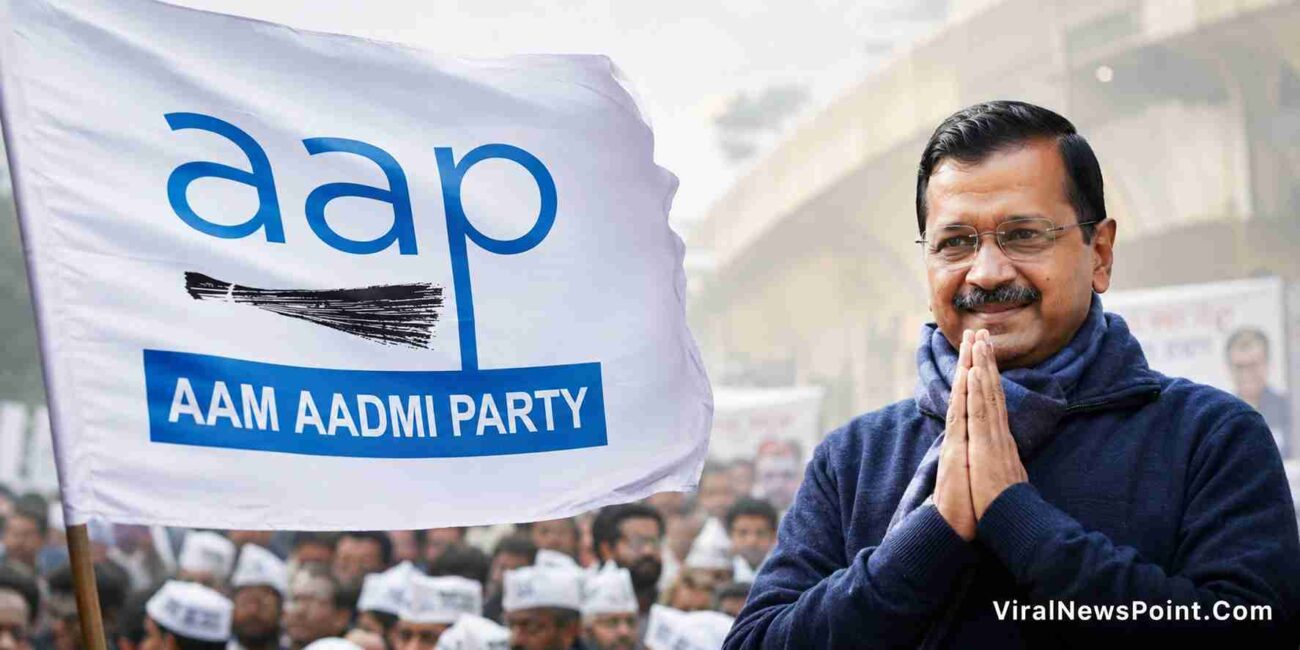
The Aam Aadmi Party, popularly known as AAP, has emerged as one of the most influential political forces in modern Indian politics. Founded in 2012, the party disrupted the traditional political landscape by presenting itself as an alternative to conventional politics dominated by the Congress and the Bharatiya Janata Party (BJP). Built on the foundations of anti-corruption activism, transparency, and governance reforms, AAP quickly gained national attention and transformed from a grassroots movement into a governing political party.
Over the years, the Aam Aadmi Party has become a significant political player, especially in Delhi and Punjab. Its governance model, centered around education, healthcare, electricity subsidies, and public welfare, has attracted both praise and criticism. The party’s journey reflects the evolving aspirations of India’s urban middle class, youth, and lower-income voters who seek clean governance and accessible public services.
Important Highlights of the Aam Aadmi Party (AAP)
| Topic | Details |
|---|---|
| Party Name | Aam Aadmi Party |
| Popular Abbreviation | AAP |
| Founded On | 26 November 2012 |
| Founder | Arvind Kejriwal and former members of the India Against Corruption movement |
| Origin | Emerged from the anti-corruption movement led by Anna Hazare |
| Headquarters | New Delhi, India |
| Election Symbol | Broom |
| Main Ideology | Anti-corruption, transparency, participatory democracy, welfare governance |
| Political Position | Centrist with governance-focused policies |
| First Major Election | Delhi Assembly Election 2013 |
| First Electoral Success | Won 28 seats in Delhi Assembly Elections 2013 |
| Biggest Electoral Victory | Won 67 out of 70 seats in Delhi Assembly Elections 2015 |
| Current Key States | Delhi and Punjab |
| Punjab Chief Minister | Bhagwant Mann |
| Major Governance Focus | Education, healthcare, electricity subsidies, free water schemes |
| Famous Healthcare Initiative | Mohalla Clinics |
| Major Education Reforms | Modernized government schools and introduced Happiness Curriculum |
| Governance Model | Welfare-oriented and service-delivery-based governance |
| National Expansion Efforts | Contested elections in Gujarat, Goa, Uttarakhand, and other states |
| Main Support Base | Urban middle class, lower-income groups, youth, and educated voters |
| Key Political Message | Clean politics and better public services |
| Major Criticism | Accused of populism and excessive subsidy politics |
| Major Achievement | Changed political focus toward governance and public welfare |
| National Party Status | Recognized as a national political party in India |
| Main Rival Parties | BJP and Congress |
| Core Vision | Empowering the “common man” in Indian politics |
Origin of the Aam Aadmi Party
The roots of the Aam Aadmi Party lie in the anti-corruption movement led by social activist Anna Hazare in 2011. The movement, popularly called the India Against Corruption campaign, demanded the implementation of a strong Lokpal Bill to combat corruption in public offices. During this movement, several activists, including Arvind Kejriwal, played prominent roles.
As the movement gained momentum, differences emerged regarding whether activism alone could bring systemic political change. Arvind Kejriwal and his supporters believed that entering electoral politics was necessary to reform governance from within. This led to the formation of the Aam Aadmi Party on November 26, 2012.
The term “Aam Aadmi” translates to “common man,” reflecting the party’s mission to represent ordinary citizens rather than political elites. The broom symbol chosen by the party symbolized the cleaning of corruption from politics and administration.
Ideology and Political Philosophy
The Aam Aadmi Party positions itself as a party focused on transparency, accountability, anti-corruption measures, decentralization, and welfare-oriented governance. Unlike traditional ideological parties that align strictly with left-wing or right-wing politics, AAP projects itself as a pragmatic governance-based party.
One of its core principles is participatory democracy. The party initially promoted the idea of “Swaraj,” where local communities and mohalla sabhas would play a larger role in decision-making. This concept was heavily influenced by grassroots governance models and aimed to reduce bureaucratic centralization.
AAP’s political narrative often revolves around improving public services rather than engaging in identity-based politics. Its governance strategy focuses on affordable electricity, quality education, healthcare access, women’s safety, and public transport reforms.
Rise to Power in Delhi
The Aam Aadmi Party’s rapid rise surprised political analysts across India. In the 2013 Delhi Assembly elections, the party contested for the first time and won 28 out of 70 seats. Although it did not secure a majority, it formed a government with outside support from the Congress party.
Arvind Kejriwal briefly served as the Chief Minister of Delhi in 2013–14. However, the government resigned after 49 days due to disagreements over the Jan Lokpal Bill. Critics accused the party of political immaturity, while supporters viewed the resignation as a principled stand against corruption.
The turning point came in the 2015 Delhi Assembly elections, where AAP achieved a historic landslide victory by winning 67 out of 70 seats. This victory established the party as a dominant political force in Delhi. The party repeated its success in the 2020 Delhi Assembly elections by winning 62 seats.
Under Arvind Kejriwal’s leadership, AAP focused heavily on governance reforms, especially in education and healthcare. Government schools in Delhi witnessed significant infrastructural improvements, teacher training programs, and modernization efforts. Mohalla Clinics became one of the party’s flagship healthcare initiatives, providing basic medical services at low cost.
Governance Model and Welfare Policies
The governance model adopted by the Aam Aadmi Party is often described as welfare-oriented and service-driven. The party emphasizes direct benefits to citizens through subsidies and public investment.
Education Reforms
AAP’s education policies in Delhi gained national recognition. Government schools were upgraded with improved classrooms, smart learning systems, and teacher development programs. The introduction of happiness curriculum and entrepreneurship mindset curriculum aimed to reform learning methods beyond conventional academics.
The Delhi government under AAP increased education spending significantly compared to previous administrations. Many supporters consider this one of the party’s most successful governance achievements.
Healthcare Initiatives
Mohalla Clinics became a major healthcare innovation associated with AAP governance. These neighborhood clinics were designed to provide accessible primary healthcare services to residents. The Delhi government also invested in hospital infrastructure and free diagnostic services.
Healthcare reforms helped the party strengthen its image as a governance-focused political organization rather than merely an activist movement.
Electricity and Water Subsidies
AAP gained popularity among middle-class and lower-income households by introducing subsidized electricity and free water schemes. The party argued that efficient governance and reduced corruption allowed savings to be redirected toward public welfare.
Critics, however, accused the party of promoting “freebie politics” and questioned the long-term sustainability of such subsidies. Supporters countered that these schemes improved the quality of life for millions of residents.
Expansion Beyond Delhi
After consolidating power in Delhi, the Aam Aadmi Party began expanding its political ambitions nationwide. The party contested elections in several states, including Goa, Gujarat, Uttarakhand, and Punjab.
AAP’s biggest breakthrough outside Delhi came in Punjab. In the 2022 Punjab Assembly elections, the party secured a massive victory and formed the government under Chief Minister Bhagwant Mann. This victory demonstrated that the AAP model could resonate beyond urban Delhi politics.
The party also attempted to build its presence in states like Gujarat, where it positioned itself as an alternative to the BJP and Congress. While its national footprint remains limited compared to major national parties, AAP has successfully established itself as an emerging political challenger.
Leadership and Organizational Structure
Arvind Kejriwal remains the central face of the Aam Aadmi Party. A former Indian Revenue Service officer and activist, Kejriwal’s leadership style combines populist messaging with governance-focused politics. His communication strategy often emphasizes simplicity, accessibility, and anti-establishment narratives.
The party has also seen internal conflicts and departures of prominent leaders over the years. Founding members such as Yogendra Yadav and Prashant Bhushan left the party following ideological and organizational disagreements.
Despite such challenges, AAP has maintained a relatively centralized leadership structure, with Kejriwal continuing to dominate decision-making and public outreach.
Criticism and Controversies
Like every major political party, the Aam Aadmi Party has faced criticism and controversies. Opponents accuse the party of political opportunism, excessive populism, and inconsistent ideological positioning.
AAP has also faced allegations related to governance issues, administrative conflicts with the Lieutenant Governor in Delhi, and accusations from opposition parties regarding corruption and political funding. Several leaders associated with the party have been investigated by central agencies, leading to intense political confrontations.
Critics argue that the party’s governance model relies heavily on subsidies and media-driven campaigns. Others question whether AAP can successfully scale its governance approach across diverse Indian states with different social and economic conditions.
Supporters, however, maintain that the party has improved public services, challenged entrenched political systems, and made governance more citizen-focused.
Impact on Indian Politics
The emergence of the Aam Aadmi Party significantly altered Indian political discourse. AAP shifted public debate toward governance performance, public service delivery, and corruption-free administration. The party demonstrated that issue-based politics could mobilize urban voters effectively.
AAP’s electoral success also forced traditional parties to focus more on education, healthcare, electricity pricing, and welfare schemes. Many political analysts believe that the party redefined campaign strategies by emphasizing governance metrics over purely ideological rhetoric.
Furthermore, the rise of AAP showcased the increasing importance of regional political experimentation in India’s federal democracy. It proved that a relatively new party could challenge established political structures if it connected effectively with voter aspirations.
Future of the Aam Aadmi Party
The future of the Aam Aadmi Party depends on its ability to expand beyond regional strongholds while maintaining its governance credibility. Delhi and Punjab remain its primary political bases, but national expansion presents significant organizational and electoral challenges.
AAP’s long-term success will likely depend on whether it can balance welfare politics with sustainable economic management, maintain internal unity, and establish a stronger nationwide cadre network.
As Indian politics continues to evolve, the Aam Aadmi Party remains an important case study in political transformation, grassroots mobilization, and governance-focused electoral strategy. Whether it becomes a long-term national alternative or remains a strong regional force, its influence on India’s political culture is undeniable.
