
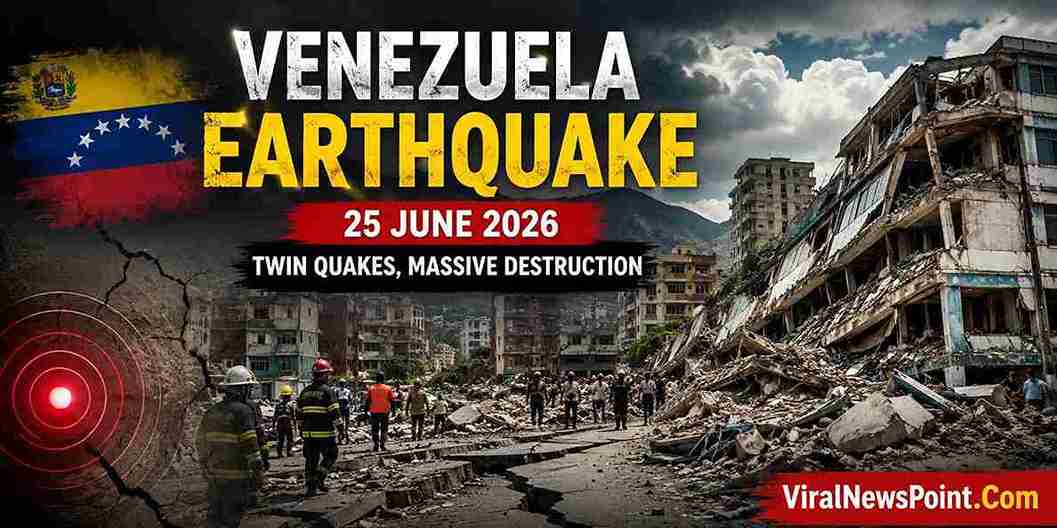
Venezuela Earthquake: On 25 June 2026, Venezuela was struck by one of the most destructive earthquakes in its modern history. Two powerful earthquakes hit within seconds of each other, causing widespread devastation across the country. Buildings collapsed, thousands were injured, rescue teams rushed to save survivors trapped beneath rubble, and emergency services faced one of their biggest challenges in decades.
The twin earthquakes not only shook Venezuela but were also felt across neighboring Caribbean regions, prompting tsunami warnings and international humanitarian support.
Venezuela Earthquake 2026 Overview
| Event | Details |
|---|---|
| Date | 25 June 2026 (24 June local evening in Venezuela) |
| Main Earthquakes | Magnitude 7.2 and 7.5 |
| Epicenter | Near San Felipe, Yaracuy State, western Caracas region |
| Depth | Approximately 10 km |
| Type | Strike-slip earthquake |
| Strongest Impact | Caracas, La Guaira, Yaracuy, Carabobo |
| Aftershocks | Multiple significant aftershocks reported |
The first earthquake measured 7.2 magnitude, followed only 39 seconds later by an even stronger 7.5 magnitude earthquake. Scientists described this rare sequence as an earthquake doublet, where two major earthquakes occur almost immediately one after another, dramatically increasing structural damage.
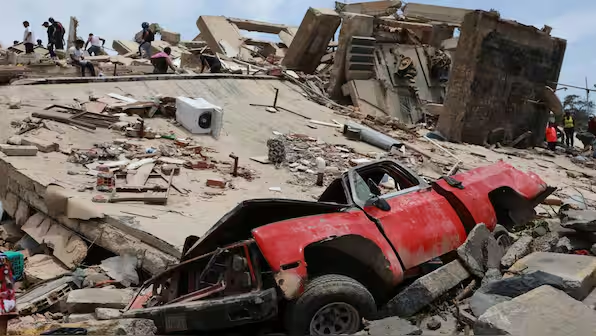
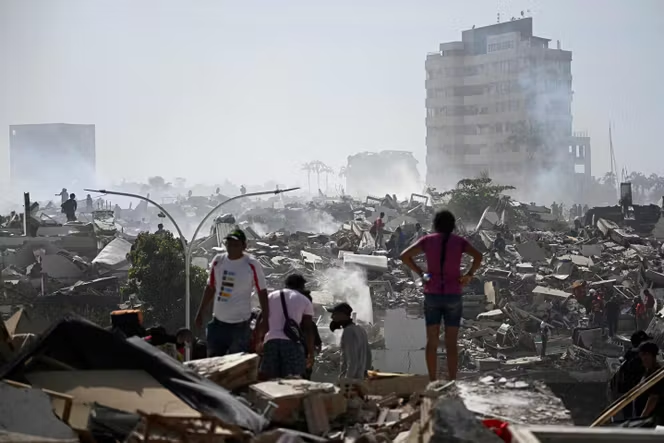
What Happened?
The earthquakes struck during the evening, catching many residents at home, in offices, restaurants, shopping centers, and public places.
Within seconds:
- Buildings began swaying violently.
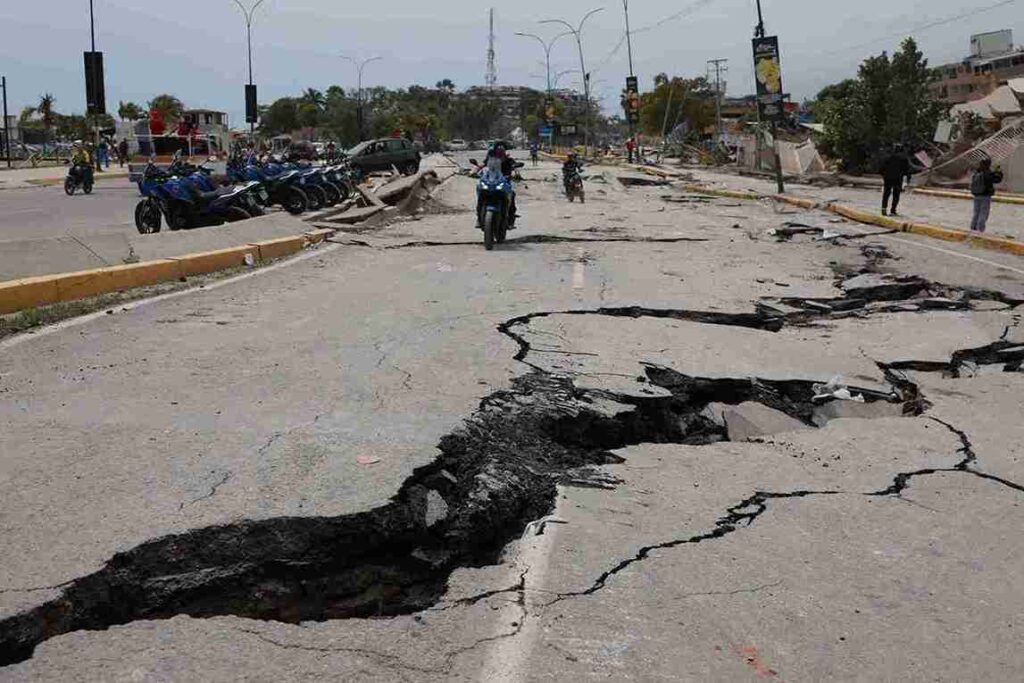
- Roads cracked.
- Electricity failed in several cities.
- Communication networks became overloaded.
- Hospitals quickly filled with injured residents.
- People rushed into open streets seeking safety.
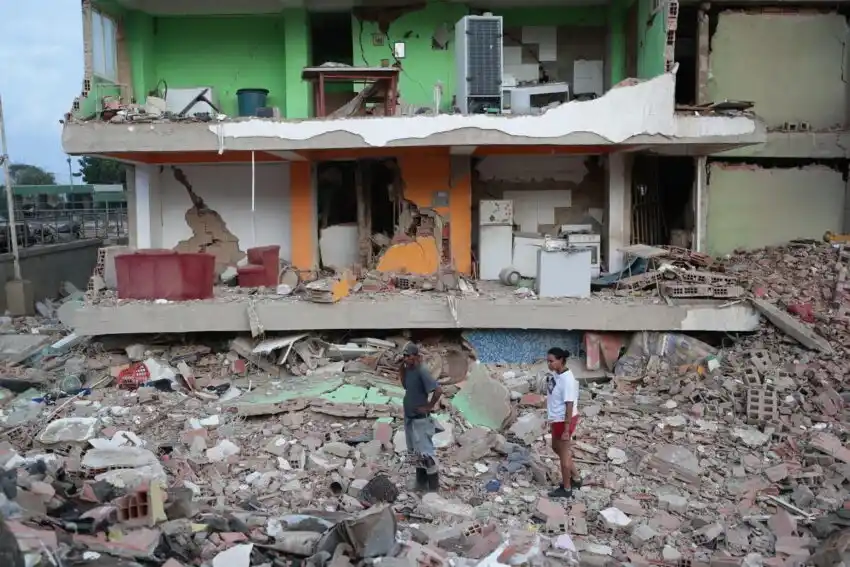
Many older buildings that survived the first earthquake collapsed during the second, stronger shock.
Areas Most Affected
The destruction was concentrated in northern and central Venezuela.
Majorly affected regions included:
- Caracas
- La Guaira
- Yaracuy
- Carabobo
- Valencia
- Catia La Mar
- Playa Grande
The coastal state of La Guaira experienced some of the worst destruction, with residential buildings, hotels, and public infrastructure heavily damaged. Caracas also suffered major building collapses and infrastructure failures.
Casualties and Damage
As rescue operations continued, casualty figures rose significantly.
Authorities reported:
- Hundreds of confirmed deaths in the initial hours.
- Thousands of injured people.
- Tens of thousands reported missing while rescue operations continued.
- Thousands displaced from damaged homes.
- Hundreds of buildings either collapsed or became unsafe.
Because many people remained trapped beneath debris, officials warned that casualty numbers could continue increasing as search efforts progressed.
Rescue Operations
Emergency responders immediately launched large-scale rescue missions.
Operations included:
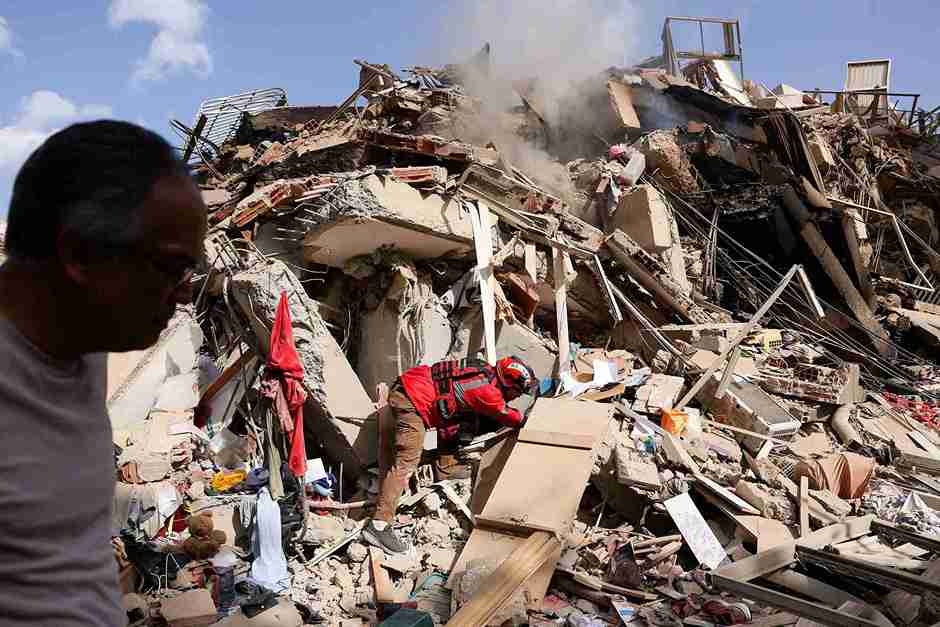
- Search-and-rescue teams using heavy equipment
- Military deployment
- Police assistance
- Medical evacuation teams
- Volunteers digging through rubble by hand
- Emergency shelters for displaced families
Several countries also dispatched specialized urban search-and-rescue teams, medical personnel, and humanitarian aid.
Infrastructure Damage
The earthquakes severely damaged critical infrastructure across northern Venezuela.
Major impacts included:
Buildings
- Residential apartments collapsed
- Office buildings damaged
- Schools affected
- Shopping centers partially collapsed
Healthcare
Several hospitals suffered structural damage while simultaneously treating thousands of injured patients.
Transportation
- Roads cracked
- Bridges damaged
- Caracas airport operations disrupted
- Public transportation temporarily suspended
Utilities
Many communities experienced:
- Power outages
- Water supply interruptions
- Internet disruptions
- Mobile network failures
Tsunami Alerts
Because the earthquakes occurred near Venezuela’s northern coast, tsunami alerts were briefly issued for parts of the southern Caribbean, including nearby islands. Authorities monitored sea levels closely, though the feared large-scale tsunami did not ultimately materialize.
Why Were These Earthquakes So Powerful?
Northern Venezuela lies along the boundary between the Caribbean Plate and the South American Plate, an area with active strike-slip faults capable of producing major earthquakes.
The exceptional damage resulted from several factors:
- Two large earthquakes occurring only seconds apart.
- Shallow depth, which increased surface shaking.
- Older buildings not designed to modern seismic standards.
- Dense urban populations in affected areas.
International Response
The disaster prompted rapid international assistance.
Support included:
- Search-and-rescue specialists
- Medical teams
- Emergency relief supplies
- Temporary communication services
- Financial humanitarian assistance
International organizations also coordinated food, clean water, shelter, and emergency healthcare for affected communities.
Safety Tips After an Earthquake
Authorities advised residents to:
- Stay away from damaged buildings.
- Prepare for aftershocks.
- Follow official evacuation orders.
- Keep emergency supplies ready.
- Avoid using elevators.
- Report gas leaks immediately.
- Check on elderly neighbors and vulnerable family members.
Frequently Asked Questions (FAQs)
When did the Venezuela earthquake happen?
The twin earthquakes occurred on 25 June 2026 (24 June local evening in Venezuela).
How strong was the earthquake?
Two major earthquakes struck within 39 seconds, measuring 7.2 and 7.5 in magnitude.
Which cities were affected?
The worst-hit areas included Caracas, La Guaira, Yaracuy, Carabobo, Valencia, and Catia La Mar.
Why did the damage become so severe?
The combination of two powerful earthquakes occurring almost back-to-back, shallow depth, and vulnerable infrastructure greatly increased the destruction.
Are aftershocks still expected?
Yes. Seismologists warned that strong aftershocks could continue for days or even weeks after the main earthquakes.
Conclusion
The Venezuela Earthquake of June 2026 stands among the country’s most devastating natural disasters in more than a century. The rare sequence of two major earthquakes within less than a minute caused widespread destruction, overwhelmed emergency services, and left communities facing a long recovery. As rescue operations continue and international aid arrives, the focus remains on saving lives, supporting survivors, and rebuilding affected regions.

Great content! Keep up the good work!