
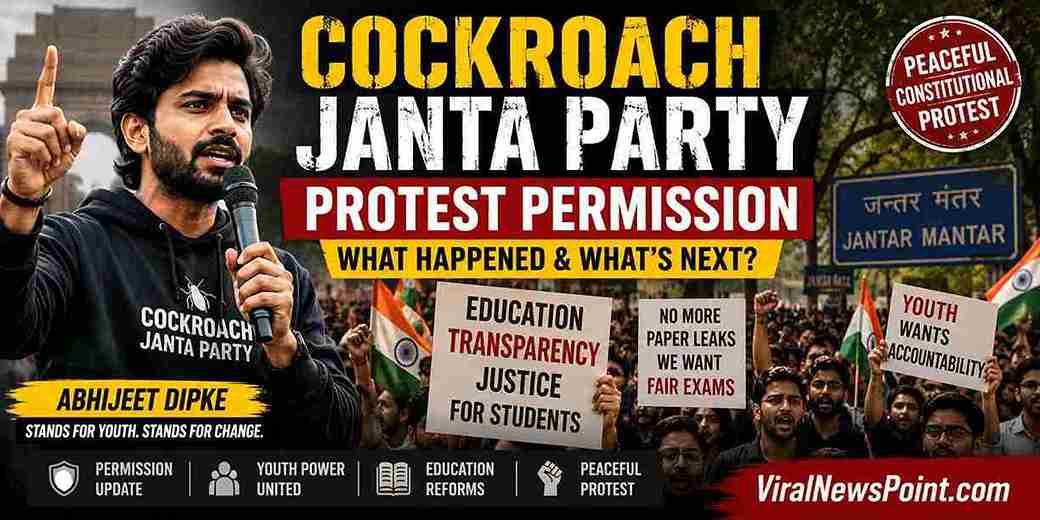
The viral youth movement known as the Cockroach Janta Party (CJP) has become one of the most talked-about political and social developments in India during 2026. Founded by Abhijeet Dipke, the movement gained massive popularity on social media by highlighting issues such as youth unemployment, examination irregularities, education reforms, inflation, and governance concerns.
Why Was the Protest Planned?
The June 6, 2026 protest at Jantar Mantar was primarily organized to demand accountability in the education sector and seek the resignation of Union Education Minister Dharmendra Pradhan. The movement has repeatedly raised concerns regarding examination paper leaks, NEET-related controversies, CBSE and CUET issues, and broader educational reforms.
Confusion Over Protest Permission
One of the biggest questions before the protest was whether Delhi Police had granted permission for the gathering.
Delhi Police Statement
According to Delhi Police, no formal request had initially been received from the Cockroach Janta Party for holding a protest at Jantar Mantar. Officials stated that protests at the venue generally require prior permission and that no application had been submitted at the time of their statement.
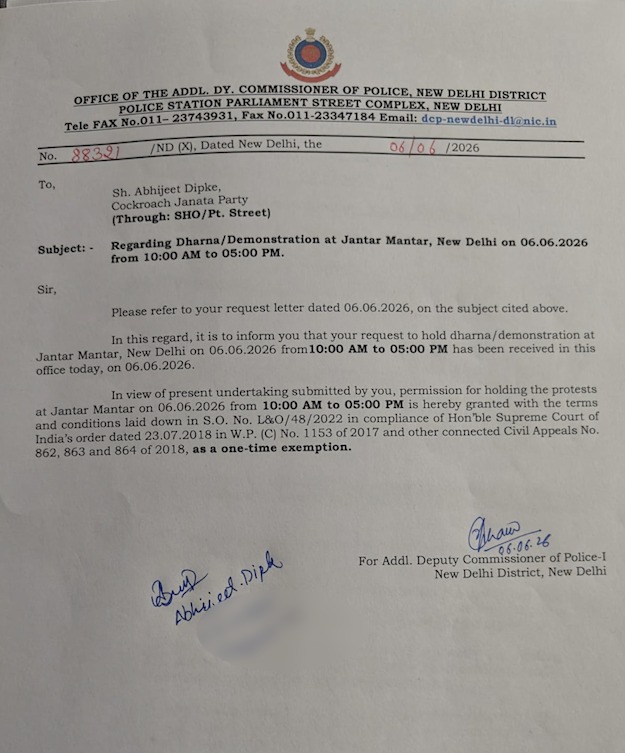
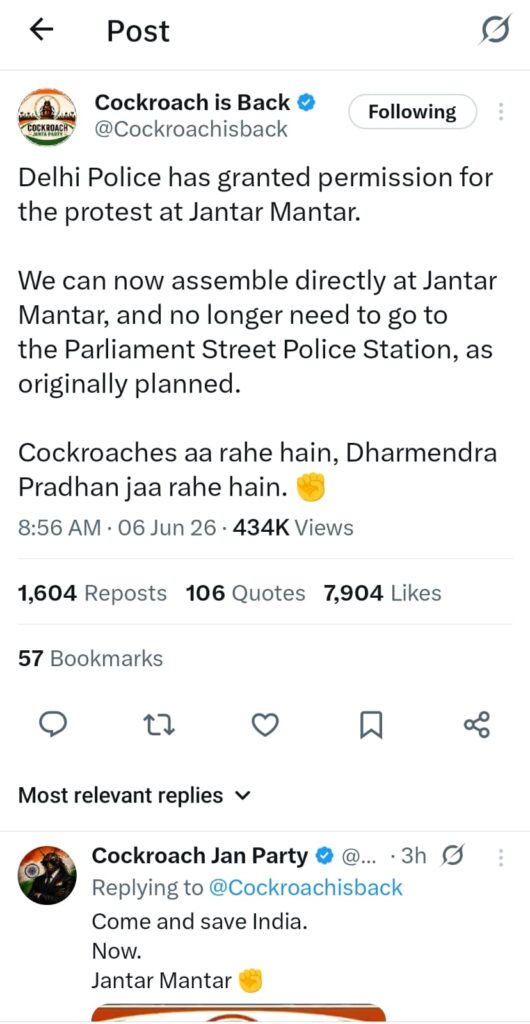
Reports of Permission Being Granted
Later reports indicated that permission had been granted for the protest. Multiple media outlets reported that Delhi Police allowed the demonstration at Jantar Mantar and implemented extensive security arrangements from the airport to the protest site.
The differing reports appear to reflect developments at different stages of the permission process rather than a direct contradiction.
Abhijeet Dipke’s Stand
1. Peaceful and Constitutional Protest
Abhijeet Dipke has consistently stated that the movement intends to operate through peaceful and constitutional means. Before arriving in India, he publicly encouraged young people to exercise their democratic rights and seek accountability through lawful protest.
2. Focus on Education Issues
Dipke has positioned the movement primarily around educational concerns rather than traditional party politics. He argues that examination irregularities and systemic issues in education are harming the future of millions of students.
3. Non-Violence and Discipline
Ahead of the protest, the Cockroach Janta Party released a detailed list of “Dos and Don’ts” for supporters. Participants were asked to:
- Remain peaceful.
- Avoid provocation.
- Carry the national flag.
- Bring books as symbols of educational concerns.
- Cooperate with authorities.
- Maintain discipline throughout the event.
4. Avoiding Airport Crowds
Initially, many supporters planned to gather at Delhi Airport to welcome Dipke. However, he later appealed to followers not to assemble there, citing public convenience and security concerns. Instead, he urged supporters to focus on the main protest event.
Growth of the Movement
The Cockroach Janta Party began as a satirical online movement but quickly evolved into a major youth-led campaign. Reports indicate that the movement attracted tens of millions of social media followers within weeks, making it one of India’s largest online youth mobilizations. Its popularity reflects growing frustration among young Indians regarding employment opportunities, education, and economic challenges.
Government and Political Reactions
The movement has generated mixed reactions:
- Supporters view it as a legitimate expression of youth concerns.
- Critics question whether its online popularity can translate into real political influence.
- Some government representatives have accused the movement of receiving support from hostile or anti-India elements, allegations that Dipke has denied.
The June 6, 2026, Cockroach Janta Party protest marked the movement’s first major street demonstration after its explosive rise on social media. While there was initial uncertainty regarding official permission, later reports suggested that the protest was allowed under security arrangements. Throughout the controversy, Abhijeet Dipke maintained that the movement’s objective was to conduct a peaceful, constitutional protest focused on education reforms, examination transparency, and youth issues. The event has further established the Cockroach Janta Party as a significant voice in India’s emerging youth-led political discourse.
